How should I adjust my pace?For the hills.
Plan your pace for the race-day weather and conditions you’ll actually train and race in.
“It’s been a game changer in my training”

What runners say after race day
“Really useful app for marathon training, especially in the heat. It helps adjust pace based on temperature and humidity, as well as elevation, so you don't overcook sessions or long runs. I've found it makes a big difference for staying controlled and consistent on hotter days. Simple to use and takes the guesswork out of pacing. Highly recommend.”
“Fantastic app for planning races effectively. Weather data is accurate & impact on performance lines up well with pace on race day. Updates are timely & effective to create an ever improving app. Highly recommend”
“Incredible detail and insight to help me maximize race day.”
“Well designed app that's great for both reviewing how you really went in that marathon where it was 5C hotter than planned, but more importantly how to target your training paces over terrain and in variable weather. Summer is a great example … how much should I slow down on that hot afternoon session so I don't blow up? How hard are those hills really? Support very accessible too. 👍👍”
6 Apps Every Runner Needs
“Started using this app fairly recently and am very impressed. Helped me sort it by pacing strategy for a recent half marathon taking in to account both the weather and course profile. Running the first few miles into a headwind it gave me confidence to relax and trust that I could make the time back - which I did!”
“Great tool to aid racing and training especially in areas effected by wind and temperature.”
“Used MeteoPace in 2025 Berlin Marathon to plan race and paces. Unprecedented hot weather av temp 27 deg. MeteoPace predicted accurately within 30 secs of my time! Under really tough conditions made it a successful day where there was significant DNF's. Thanks for such an impressive race tool!”
“I've been enjoying the app for the last few days and found the data for London very helpful. Looking forward to using this for training towards Sydney in August!”
“amazing app”
“This app is an absolute game changer.”
“Really useful app for marathon training, especially in the heat. It helps adjust pace based on temperature and humidity, as well as elevation, so you don't overcook sessions or long runs. I've found it makes a big difference for staying controlled and consistent on hotter days. Simple to use and takes the guesswork out of pacing. Highly recommend.”
“Fantastic app for planning races effectively. Weather data is accurate & impact on performance lines up well with pace on race day. Updates are timely & effective to create an ever improving app. Highly recommend”
“Incredible detail and insight to help me maximize race day.”
“Well designed app that's great for both reviewing how you really went in that marathon where it was 5C hotter than planned, but more importantly how to target your training paces over terrain and in variable weather. Summer is a great example … how much should I slow down on that hot afternoon session so I don't blow up? How hard are those hills really? Support very accessible too. 👍👍”
6 Apps Every Runner Needs
“Started using this app fairly recently and am very impressed. Helped me sort it by pacing strategy for a recent half marathon taking in to account both the weather and course profile. Running the first few miles into a headwind it gave me confidence to relax and trust that I could make the time back - which I did!”
“Great tool to aid racing and training especially in areas effected by wind and temperature.”
“Used MeteoPace in 2025 Berlin Marathon to plan race and paces. Unprecedented hot weather av temp 27 deg. MeteoPace predicted accurately within 30 secs of my time! Under really tough conditions made it a successful day where there was significant DNF's. Thanks for such an impressive race tool!”
“I've been enjoying the app for the last few days and found the data for London very helpful. Looking forward to using this for training towards Sydney in August!”
“amazing app”
“This app is an absolute game changer.”
“Really useful app for marathon training, especially in the heat. It helps adjust pace based on temperature and humidity, as well as elevation, so you don't overcook sessions or long runs. I've found it makes a big difference for staying controlled and consistent on hotter days. Simple to use and takes the guesswork out of pacing. Highly recommend.”
“Fantastic app for planning races effectively. Weather data is accurate & impact on performance lines up well with pace on race day. Updates are timely & effective to create an ever improving app. Highly recommend”
“Incredible detail and insight to help me maximize race day.”
“Well designed app that's great for both reviewing how you really went in that marathon where it was 5C hotter than planned, but more importantly how to target your training paces over terrain and in variable weather. Summer is a great example … how much should I slow down on that hot afternoon session so I don't blow up? How hard are those hills really? Support very accessible too. 👍👍”
6 Apps Every Runner Needs
“Started using this app fairly recently and am very impressed. Helped me sort it by pacing strategy for a recent half marathon taking in to account both the weather and course profile. Running the first few miles into a headwind it gave me confidence to relax and trust that I could make the time back - which I did!”
“Great tool to aid racing and training especially in areas effected by wind and temperature.”
“Used MeteoPace in 2025 Berlin Marathon to plan race and paces. Unprecedented hot weather av temp 27 deg. MeteoPace predicted accurately within 30 secs of my time! Under really tough conditions made it a successful day where there was significant DNF's. Thanks for such an impressive race tool!”
“I've been enjoying the app for the last few days and found the data for London very helpful. Looking forward to using this for training towards Sydney in August!”
“amazing app”
“This app is an absolute game changer.”


How MeteoPace works
See how weather, wind, heat, and terrain will change your pace before race day.
Choose a race
Set your goal pace and target time for the course.
New York City Marathon
Nov 1, 2026
New York, NY, USA
Impact over the hills
Elevation, climbs, and descents become pace cost along the course profile.
Weather layered onto your race
Live forecasts or historical race-day weather, mapped onto each segment of the route.
13°C
Feels like 13°C
Race Start: 12°C → End: 15°C
Cloud cover
58%
Wind
15.6 km/h
Humidity
67%
Outcome Panel
Race selected
Your goal time, before terrain and weather change the math.
Goal time
Adjusted time
3:15:00
—
Drafting
Cuts wind and still-air drag
Current: Baseline
0.0%
0.0%
0.0%
0.0%
Pace Opportunity
👍 Favorable
Race Splits
3 km increments • adjusted pace and cumulative time
Meteo Adjusted Pace (MAP)
Traditional pace zones assume perfect conditions that rarely exist in real training. MAP normalizes your performance by accounting for weather, elevation, and course difficulty so you can compare progress across any day.
Realistic Training Assessment
See how you are actually progressing, not just what your watch shows.
Weather-Independent Progress
Track fitness gains even when conditions change daily.
Course-Adjusted Metrics
Account for elevation and terrain in every analysis.
Conditions and hills cost the equivalent of
8 sec/km
Features that matter on race day
Built so you can act on the conditions. Each piece helps you adjust pace for race-day weather and terrain.

Course Modeling
We model terrain, elevation, and surrounding geography. When you are training for the hills or racing them, you see where gradient and wind exposure will cost you.
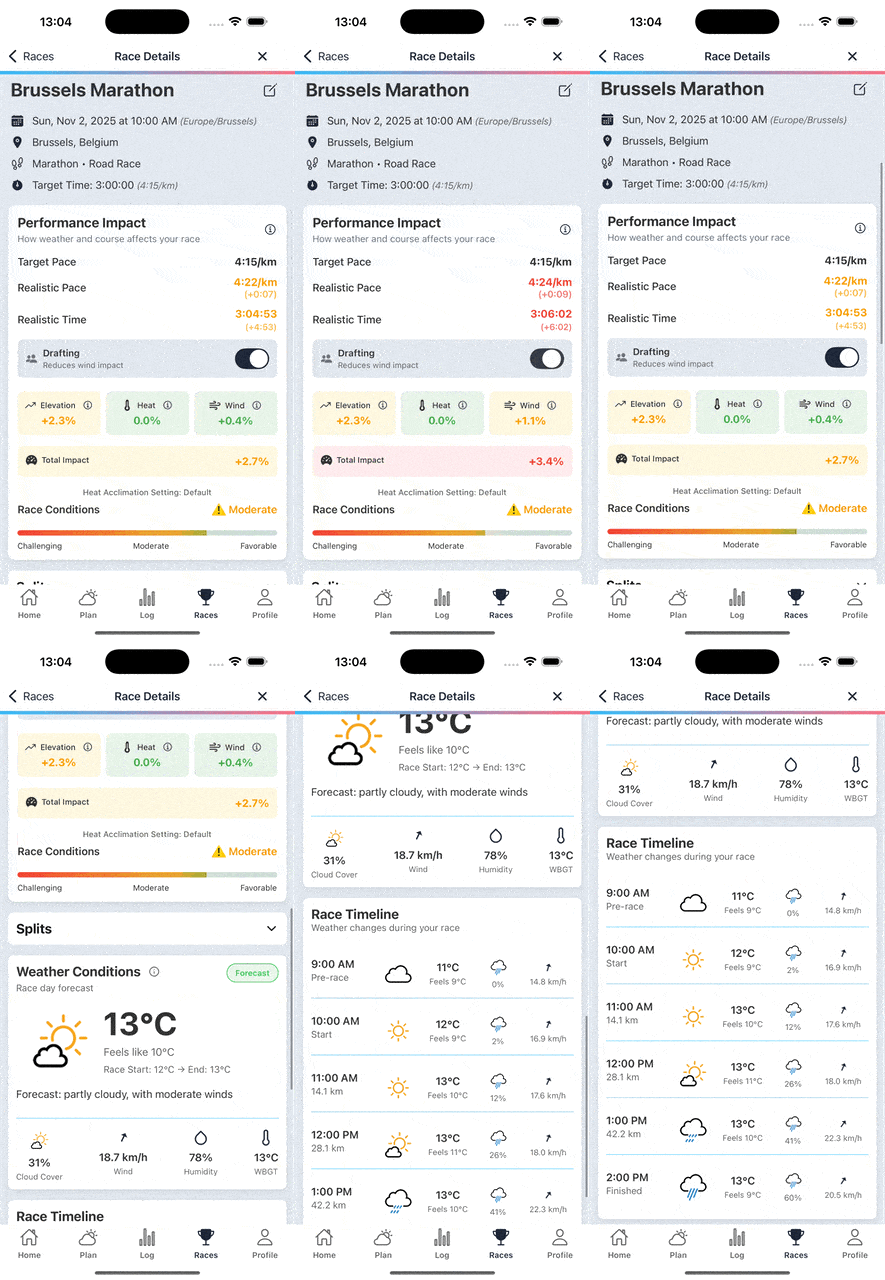
Weather Impact
Hour-by-hour temperature, humidity, wind direction vs course, and cloud cover. Useful for training with the wind as well as race day. Live forecasts close in; historical reanalysis further out.
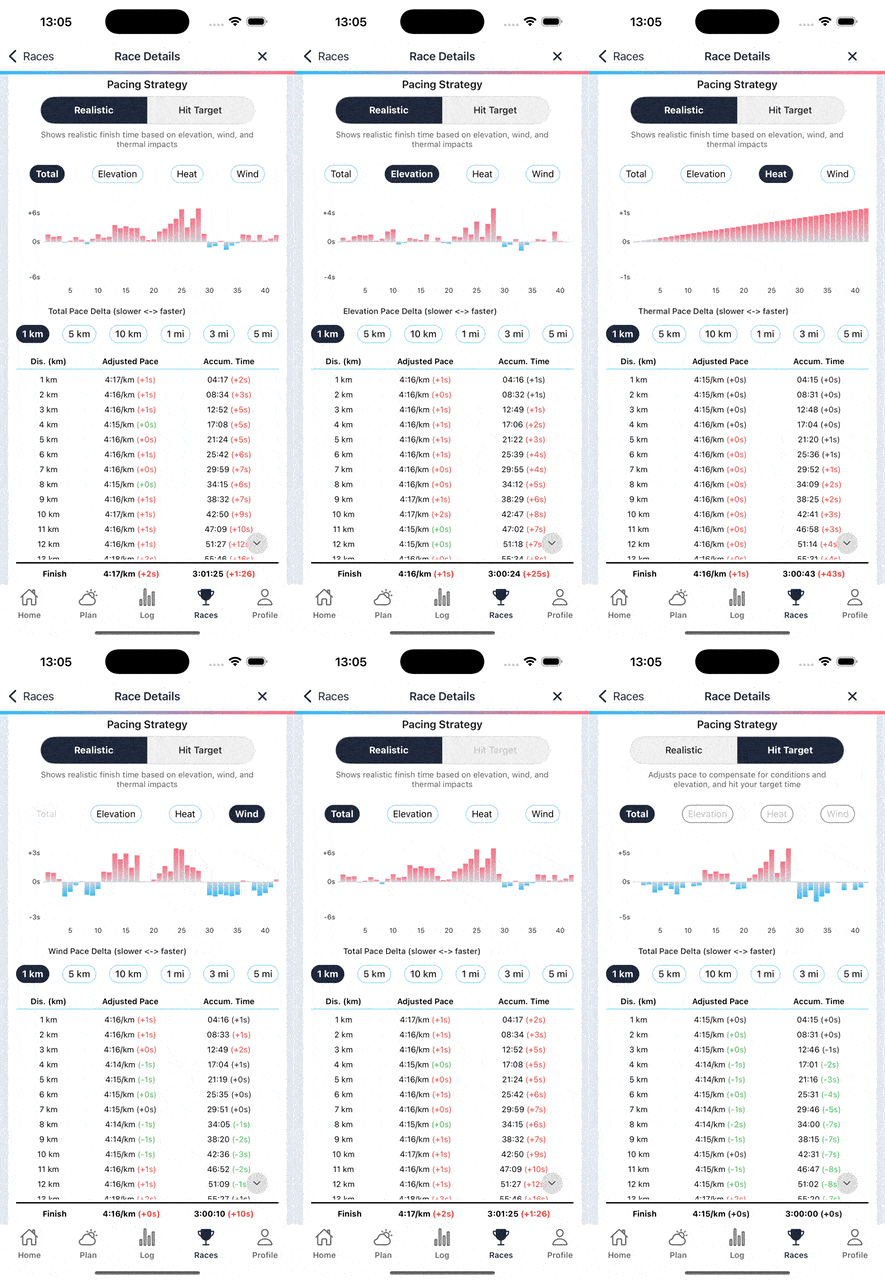
Adjusted Pacing
See a realistic adjusted finish time, or the exact splits you need to hit your original target. Know where to push and where to hold back.
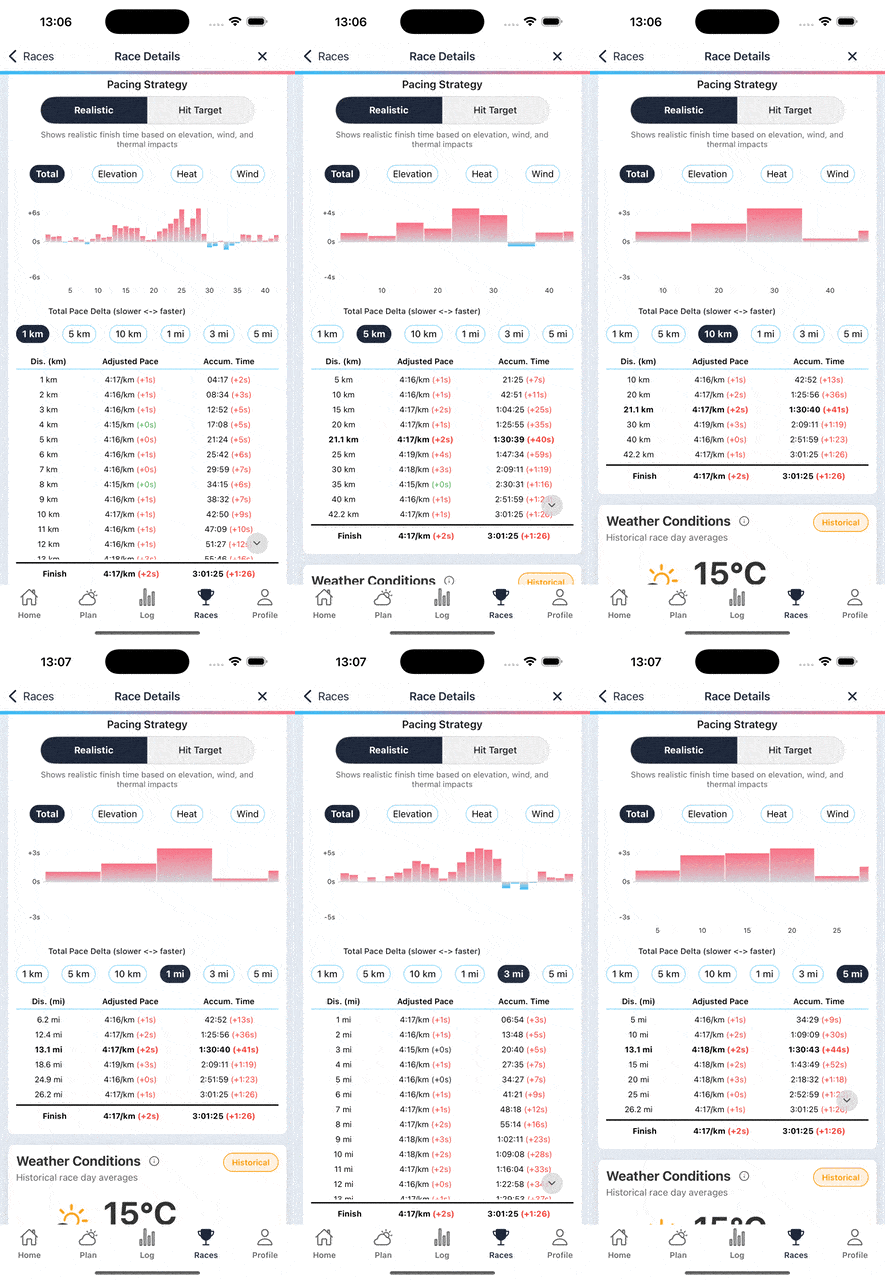
Race-Day Splits
Mile and km splits for every race marker. See the difference when you can draft vs when you can't.
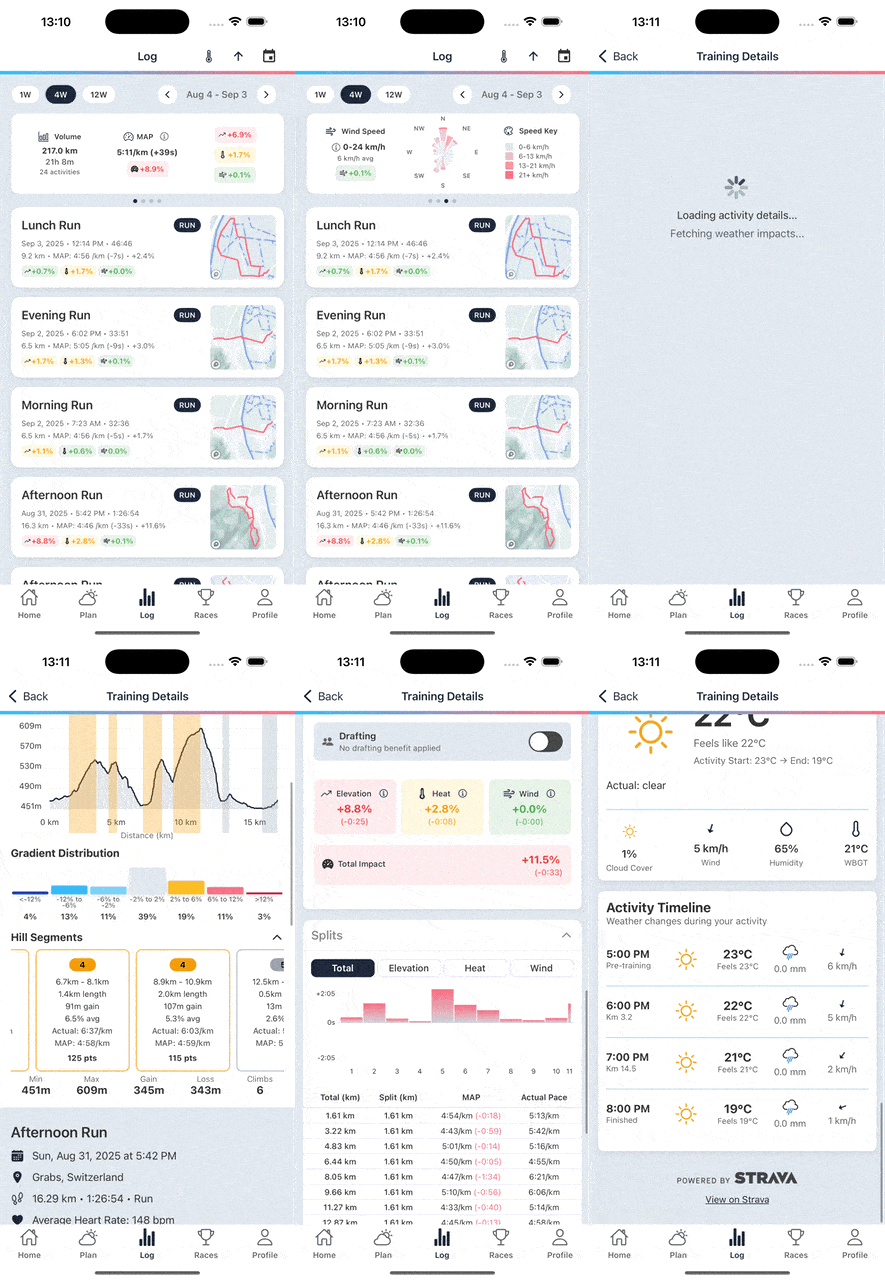
Connected services
Strava is on Core and Pro (weather and impact write-back). Send a race plan to Garmin or COROS with Pro, or with Race Pass when you have a plan.
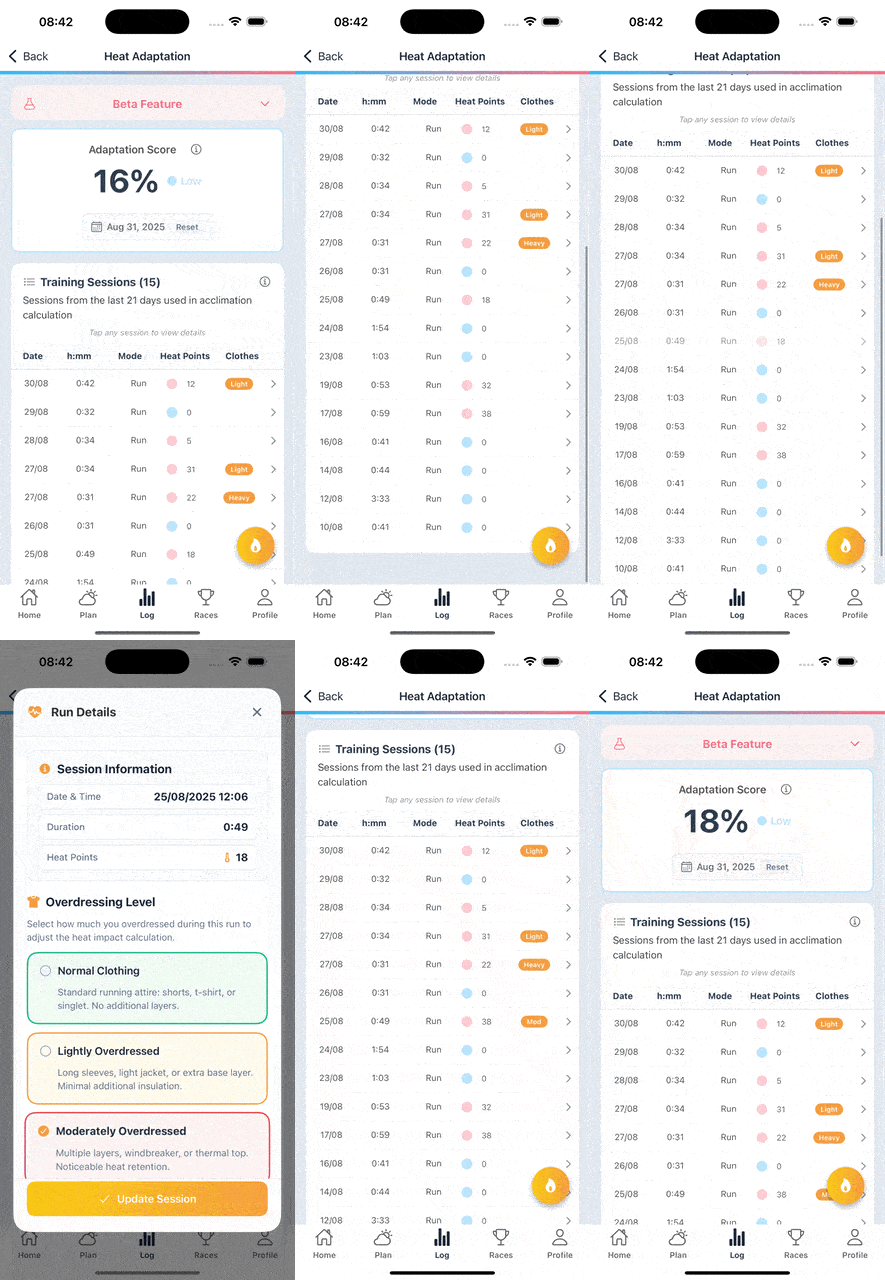
Personalized Heat Impacts
Training in the heat changes how hard a session feels. Impacts adjust to your acclimatization, so a hot easy run isn't mistaken for lost fitness.
Runners worldwide already race with MeteoPace
Elite athletes
Olympians and national team runners using MeteoPace for major championships.
Coaches
Coaches who use MeteoPace to set expectations and give feedback that matches the day.
Runners worldwide
Thousands of runners using weather and terrain context to judge training and race day.
Frequently asked questions
What is the weather impact on running?
Heat, hills, and wind change how hard a given pace feels and what finish time is realistic. MeteoPace shows that weather impact on running for race day and training, so you can adjust before you dig too deep.
How does MeteoPace help with training in the heat, wind, and hills?
MeteoPace shows how conditions change the cost of a session before and after you run. Whether you are training in the heat, training with the wind, or training for the hills, you can adjust effort and judge fitness with weather and terrain in context.
How accurate are the weather forecasts?
MeteoPace uses forecasts from national meteorological offices where possible up to about two weeks (14 days) before race day, then historical reanalysis when race day is further away. That gives you useful pacing context both close to race day and earlier in the planning cycle.
What is the difference between Race Pass, Core, and Pro?
Race Pass is one race plan. Core is daily training context and Strava. Pro is unlimited race planning, MAP splits, heat adaptation, and Garmin or COROS race-plan send. Sign-up starts with a 14-day Pro trial. Dismiss it if you want the free preview first.
How do connected services work?
Strava is on Core and Pro: weather and impact write-back, plus MAP. Sending a race plan to Garmin or COROS is Pro, or Race Pass when you have a plan. You stay in control and can revoke access anytime.
Race weather and pacing guides
Explore course conditions, weather, and pacing insights for popular races worldwide.
Races in the next two weeks
Browse all race weather and pacing guidesReady for a race plan that matches the day?
On iOS and Android now, with weather-aware pacing for racing and training.